Thanks to the new bottle of shampoo my wife recently purchased, my life is about to take a sudden and dramatic turn for the better!
Just when I thought my body could no longer fight off the relentless attacks of so many determined foes—time, gravity, bad genes, poor nutrition, stress, unnecessary abuse—she found a new product with age-defying and anti-aging properties!
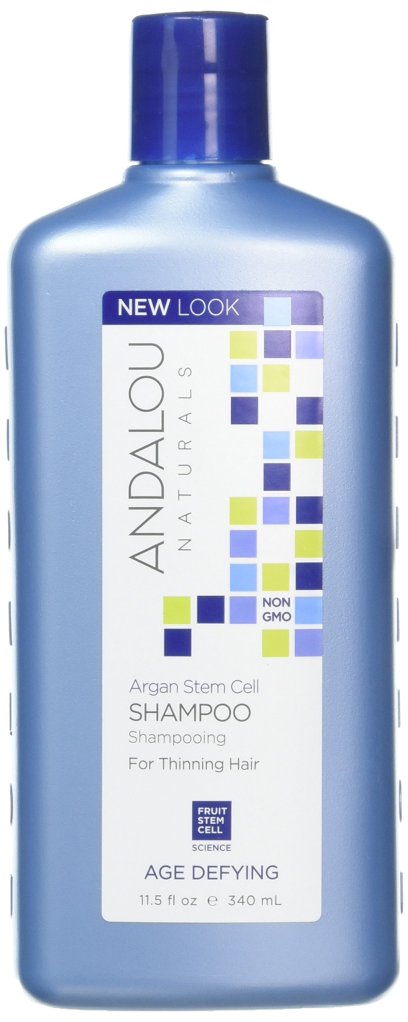
Packed with argan stem cells (no doubt a revolutionary medical miracle!), this brand puts a halt to thinning hair, nourishing stronger strands with less breakage. This is totally nouveau, according to the label on the bottle. That means “new or newly developed” in French. In fact, EVERYTHING on the bottle is also written in French, so you know this must be an excellent, effective, AND exotic formula. I am not sure why it is produced and distributed in Petaluma, California. My best guess is that a team of genius French researchers, scientists, healers, and entrepreneurs immigrated to this small town in Sonoma County a few years ago for some mysterious reason.
Yesterday, as I gently massaged this wonder-working mix of chemicals into my scalp (only to rinse and repeat as needed), I began thinking about how it might be used to reverse the well-worn signs of aging across my entire body. What if I lather every part of me, or better yet, buy enough to have a vat to soak in? I’m sure pounds will melt away! Muscles will once again (ok, begin to) ripple! Hair, which seems to grow faster in unwanted places, will migrate back to my head and chin—and all with a fuller body and more luxurious shine.
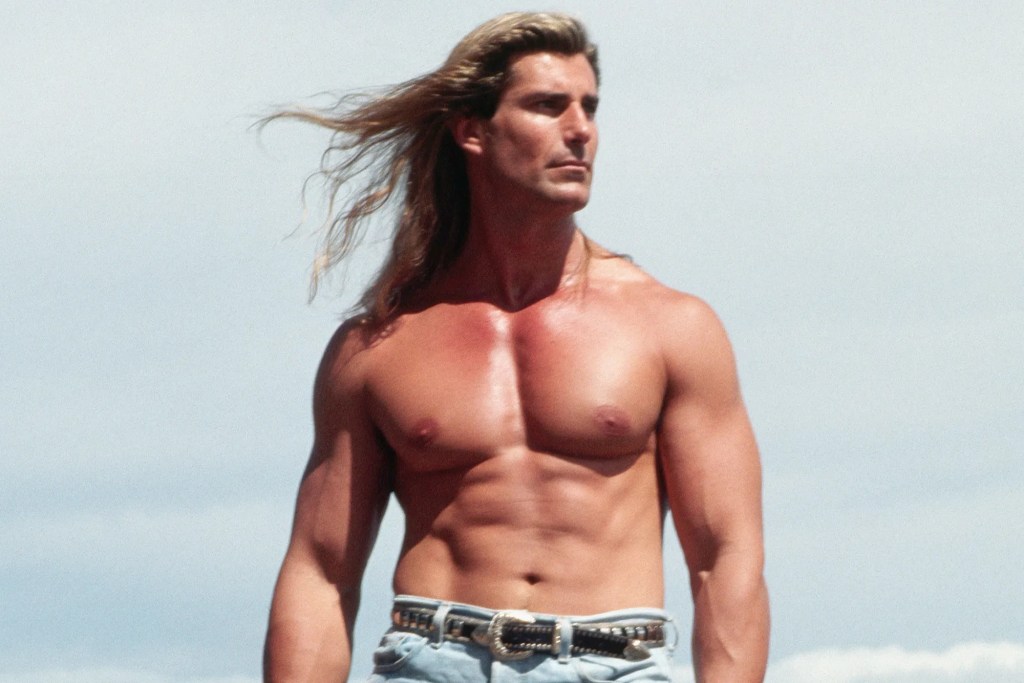
I am sure that within a few days, or maybe weeks, I will look more like Fabio than the Flabio I have become because of too many holiday goodies and insufficient exercise. Thanks, argan stem cells (or, as I now say, aux cellules souches d’argan)!
I will keep you posted on my progress. I’ve been using this product for over a week now, and though I don’t see any visible sign of change, I am sure it is working. I am using it so much that I can taste it whenever I eat, and I now feel sticky all the time. These are probably just the tell-tale signs of how deeply it is penetrating my pores. I just hope I can get the stains out of my clothing…
—–
Exactly 10 years ago this month, while waiting impatiently in a hotel lobby for a ride to an airport, I noticed the January 2015 issue of National Geographic on the table next to me. It sat there, waiting for someone to flip through its bright pages, stunning photos, and interesting articles. Since my taxi tarried, I turned my attention to the magazine, hoping to take my mind off how little time I had to make my flight.
National Geographic has always felt like a reliable publication to me. I don’t read it often, but whenever I do, I always learn something interesting about the fauna, flora, people, and places that fill the earth. Like a tabloid might, I have never known it to be filled with sensationalized stories.
So, I was surprised to stumble across a more speculative piece that proposed to offer a glimpse into what our world will look like over the next several decades. Different writers tackled particular topics and time periods within the article. If you missed this edition, here is the cliff note version from the magazine I may or may not have taken with me that day. (spoiler alert!).
- How we will live within 5 – 10 years: We will have driverless cars. We won’t own cars; instead, like most things, we will subscribe to them rather than purchase them. Likely, there will be a new religion based on the environment because our traditional belief systems have been shaken to the core.
- How we will love within 10 – 20 years: Divorce will decrease because Boomers will die off. People in love will often live apart because of jobs or preferences. The aged will move in and out of assisted living facilities as needed and seemingly with ease.
- How we will heal within 10 – 20 years: Technology will revolutionize medicine. Our personal genomes will be sequenced to provide treatment tailored to our needs. 3-D printing will produce affordable exoskeletons and prosthetic devices for those who need them.
- How we will be powered within 50 years: We will have 100% clean energy and climate stability.
The section that most caught my eye came from an article by Brian Reese, author of Infinite Progress: How the Internet and Technology Will End Ignorance, Disease, Poverty, Hunger, and War.
In it, he suggests we will experience a fundamental shift in how we age. He writes on How we will age within 20 years (by 2035):
“Since technology grows exponentially, not in a linear way, we will see dramatic improvements in our way of life in just a few years. Though it took us 4000 years to get from the abacus to the iPad, in 20 years, we will have something as far ahead of the iPad as it is ahead of the abacus. This means that soon, we will be able to solve all problems that are fundamentally technical. These problems include disease, poverty, hunger, energy, and scarcity. If you can live a few years more, there is a real chance you will never die since mortality may be just a technical problem we solve. All these advances will usher in a new golden age, free from the scourges that have plagued humanity throughout our future.”
Several ideas within the larger list are beginning to happen, and others may be coming to fruition. I will say, now that we are halfway through the author’s 20-year timeline on “How we will heal,” we seem to be a bit off-schedule.
Last June, the Global Peace Index revealed 56 conflicts worldwide—the most since WWII. Last year, 108 countries increased their military spending and weaponry. Over 160,000 people died in conflict-related ways, and this was before some of the worst of the killings in Gaza, Ukraine, and Russia. Around the world, over 110 million people are internally displaced or are refugees in other countries. Since 2019, the number of people facing famine has risen sharply due to conflict, climate change, and economic insecurity. And, as I mentioned in my last post (https://walkingintheway.blog/2025/01/01/bucket-list/), poverty remains a desperate problem for much of humanity.
Apparently, the “golden age” is more challenging to forge than the writer expected.
As someone who works with congregations and non-profit organizations through change strategies, we often explore the difference between “technical” and “adaptive” change. A technical challenge may require some new thinking or a certain level of innovation, but generally, a solution arises by gathering additional facts, improving a system, or implementing an improved process that helps an existing system to continue. On the other hand, an adaptive challenge requires a whole new perspective, an unexpected or as-yet-unknown innovation, and a shifting of values and beliefs. Successful adaptive change is very often painful and unsettling and requires the entire system to buy into becoming something new.
I suppose it is not outlandish to argue, as the author did, that “we will be able to solve all problems that are fundamentally technical. These problems include disease, poverty, hunger, energy, and scarcity.” One might conjure up solutions to help alleviate each of these, but I am convinced they will never work without a more fundamental adaptive change. Unfortunately, all the advanced technology, enhanced medicines, improved transportation, and more sustainable energy sources will not overcome the unrelenting challenge arising from human selfishness, violence, nationalism, and sin. No mere technical change will suffice—even with argan stem cells. We must have our lives and communities reoriented and fundamentally changed. From my perspective and experience, this is beyond our human capacity. It requires a power and grace from another Source—who is less interested in the way we humans tinker with change and more interested in overhauling who we are at our core.
When I read this piece, I was especially tickled by the notion, “If you can live a few years more, there is a real chance you will never die since mortality may be just a technical problem we solve.” I hope this is not the case. Can you imagine the unintended consequences of this for ourselves, our relationships, and the planet?
Though I am not at all certain what eternal life fully entails, I am much more interested in it than I am in immortality—even if I can have fantastic hair! Now, if I can figure out what to do with all of these cases of shampoo…
Oh well, se la vie!

 Walking in the Way and Stumbling Toward Faithfulness
2 responses to “We may (not) be experiencing technical difficulties…”
Thank you Colin, I enjoyed this fairy tale Maryellen
Sent from the all new AOL app for iOS
LikeLike
Haha–my life is a fairy tale! I hope you are doing well!
LikeLike