Sometimes, the journey toward death can reveal the fissures and fractures in our lives and expose the same in relationships we share with other people. As the end draws near and we face our mortality, it also often creates space for us to reflect on our relationship, or lack of relationship, with our Creator. I think most of us long to be at peace in each of these spheres—with God, others, and ourselves.
In many ways, peace with God is the easiest since it is a gift waiting to be received. Peace with others may require much from us, and even then, it is partly contingent on the willingness of others to mend what may be broken.
This leaves peace with oneself—a seemingly unsolvable puzzle for many people.
My mother dealt with worsening emphysema for the last several years of her life. She was a long-time smoker, and though she quit altogether later in life, the damage to her lungs was irreversible. Mom labored to breathe and wound up mostly tethered to an oxygen machine for several years. As she grew closer to the end, she struggled to muster up the energy to do more than very simple activities.
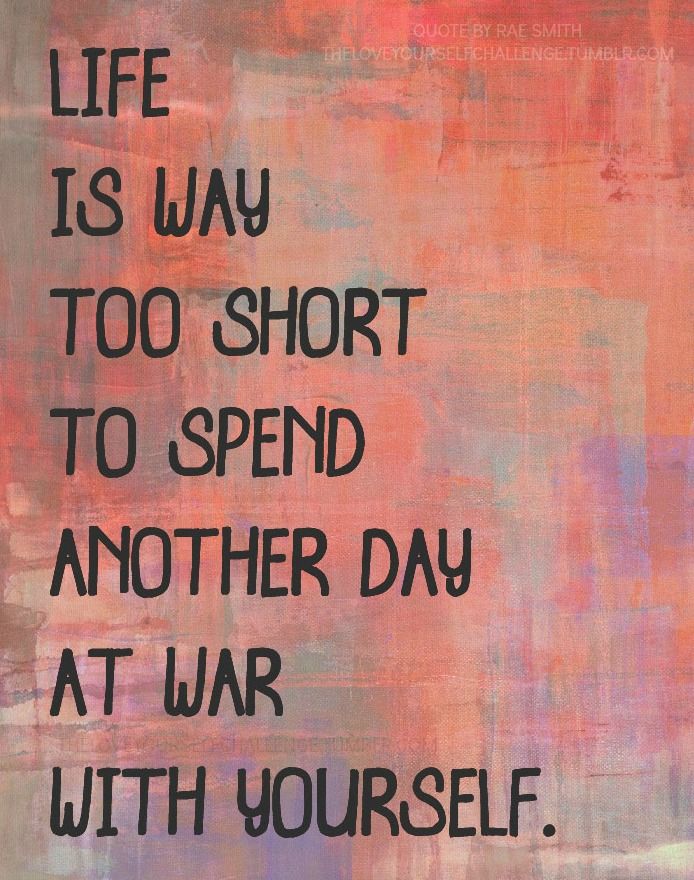
Mom greatly regretted this and surprised me once by asking “if I thought God would forgive her” for so damaging her body. “Of course,” I said, “but are you willing to forgive yourself? We have all done things we regret, but none of us needs to remain trapped in regret or shame. It neither changes nor solves anything. What does seem important is to learn from it and move on.” Through her tears, she said she would try to forgive herself and be at peace with who she was today rather than being disgruntled and distracted by the past. I can’t know for sure, but it seemed like Mom settled something within herself moving forward.
The last time I visited my parents together, I arrived on a Thursday, and all seemed normal. Dad puttered around the property while perpetually cold Mom bundled up in her heavy coat and blanket, moving from the kitchen to the couch. She seemed in good spirits, but by Friday morning, I could see she was struggling in unexpected ways.
We were not prepared to deal with a medical emergency. Mom had long been terrified at the prospect of going to the hospital out of fear she would not come home. So, when I asked her if she might be open to getting checked out at the ER 40 miles away, I knew she recognized how seriously she was declining when she replied, “I think we better do that.”
Dad seemed bewildered by the thought of her needing to see the doctor, so it took a while for us to muster our energies to get out the door and on the road. The Friday night crowd filled the emergency waiting room when we arrived at the local hospital. Three hours later, we had not seen a physician, and Mom was fading. Eventually, I wrangled one of the nurses to see if we could get her admitted rather than wait any longer for an ER doctor.
I don’t remember for sure, but I think Mom dropped into an unresponsive state within a few hours. Soon, my sister arrived, and before long, our mother was moved to a palliative care room when the team of doctors concluded there was no real way to help her.
What seemed like a grace to me—that mom could rest quietly and seemingly peacefully in bed for the last few hours of her life—was completely disorienting to my father. It was clear he did not expect this. Not right now. The speed at which Mom was dying left him emotionally off-balance.
I chose never to write about my father while he was living. He was an intensely private man who would have been enraged at the thought I was disclosing anything about him, or that I imagined I might know what he was thinking or feeling. The latter is mainly true—he rarely shared deeply, at least with me. Though I tried to love my father the best I knew how—I did not always like him. I suspect he may have felt the same toward me. Unfortunately, his side of the family was riddled with a history of conflicted or severed relationships, and I was determined not to continue that pattern with him. We shared a superficial connection, bound by blood and strung together by our ability to make the other laugh. Right or wrong, I purposefully put limits around my relationship with him to preserve my well-being and limit the likelihood of him pushing me away if things got uncomfortable.
But on that day, as I watched him watch his wife of over 50 years exiting his life, I felt a more profound compassion for him. As far as I could see, he was the one suffering in the moment, not my dying mother.
There we were—my father, sister, and I sitting silently in the late hours of the night in various corners of Mom’s hospital room. Only the flickering light from the array of medical devices made her outline visible. Across the room, I could feel sadness seeping from my father as he stewed in the quiet darkness.
At about 2:00 a.m., a new nurse just coming on her shift burst into the room and said, “How is everyone doing in here?” She flipped on the light and informed us, “Sally (my mom) can still hear you! You should be talking to her rather than sitting here in the dark!”
I looked at my father and watched his eyes narrow. I knew that look and could envision a cauldron of rage about to explode upon this unsuspecting nurse who was only trying to ensure her patient’s best comfort and care. Before all hell broke loose, I leaned toward my dad and said, “How about you and I go for a walk?” Those narrowed eyes narrowed further, but without saying a word, he got up and followed me out of the room. I looked at my sister, who I knew would deal appropriately with the nurse, and we exited the room.
About 20 steps down the hallway, my dad turned to me and said, “You just saved that woman’s life, didn’t you?”
“I think maybe so…”
A few steps further, he slumped down on a bench, and I took my place beside him. For the first and only time in my life, my father began to cry in my presence. Somehow, the tears must have unlocked something within him because, for the next several minutes, he poured out years of regret for how he had treated my mother and wished he had been a better husband to her.
Growing up, one of my Dad’s familiar refrains when I did something wrong was, “Sorry is not good enough.” Over and over again, I heard that message. Intuitively, I knew this was ridiculous, but even asinine ideas have immense power over us if we are subjected to them long enough. As a youth, I felt imprisoned by the impossibility of ever being at peace with him and, because of that, with myself. “Sorry was not good enough,” I assumed, because I was not good enough. Later, when grace upended my world and I experienced the liberating power and freedom of forgiveness, I understood how completely wrongheaded my father was about all of this. Sorry, when genuinely expressed, is enough. It is enough. It is, indeed, enough.
“Did you ever tell Mom you were sorry for treating her in those ways?” I asked. Starring straight into the floor, he slowly nodded. “And you meant every word of it, didn’t you?” “Of course,” he sputtered. And what did she say when you apologized?” “She told me, ‘I forgive you.’”
And then, in maybe the most intimate moment I ever shared with my father, I asked him, “Have you ever known Mom to lie to you?” Turning to look me in the eyes, he slowly shook his head no. “Then don’t doubt her now. Mom forgave you and would never want you to hold onto these regrets. You are forgiven, Dad, but now you must forgive yourself.”
Soon, we were back in Mom’s now dark and quiet room. My wise and caring sister handled the nurse gracefully, and the three of us resumed our silent vigil until she passed away a few hours later.
I am not sure my father traveled down the road to self-forgiveness as far as my mother seemed to. I hope he found some comfort in the notion that his wife genuinely believed “sorry is good enough” and was willing to forgive him entirely. I am sure having him say those words meant the world to her. Whether he was ready to extend that same healing grace to himself, I cannot say for sure. It never came up again, at least in conversations with me.
This inability to forgive ourselves is so deeply ingrained in many of us. Like my father, maybe we are imprisoned by regret over how we treated others. Others feel entangled in the pain of missed opportunities, misplaced priorities, or wasted years. For others, as we sit around getting older and watch the fruits of our labor fall and rot slowly on the ground, it can leave us wondering and worrying that we should have done differently, been better, known better. All these realities and more keep us at odds with ourselves rather than at peace.
Though I no longer believe everyone is trying to do the best they can—most of us give it a good effort throughout our lives. We get waylaid and confounded by trauma, stress, and our limited knowledge and experience. And though most of us wish it were not so, we leave behind a trail of hurtful words, harmful actions, stupid choices, and regrettable decisions. It is part of being human.
There is a vast difference, however, between being sorry for what I have done and being sorry for who I am. Within my spiritual tradition, we often emphasize the powerful and remarkable truth that we are each made in the image of God. We assert that all humans contain some measure or flicking light of God within. We are beloved and a part of a creation that God called and calls good—even very good. Our unwillingness to release ourselves from past mistakes and misdeeds can rob us of remembering we are made in the image of God, beloved by God, and offered a grace so amazing that it can transform us into something more lovely than we ever might have imagined.
Over the years, I have sat with enough people on their dying days to notice a profound difference between those who are reconciled with themselves and those who are not. Acceptance replaces anxiety. Calm settles conflict. Rest hushes regret. Yes, I am sorry for things said and done, and several unsaid and undone, throughout my life. But I am powerless to change any of that now—and have forgiven myself. Today, I am at peace. I hope you are, too. Tomorrow is coming, at least probably, and this time, we might just get it right!
 Walking in the Way and Stumbling Toward Faithfulness
4 responses to “On Death part 5: Being at Peace with Ourselves”
I am at peace.
Sent from the all new AOL app for iOS
LikeLike
Blessings to you!
LikeLike
This is a deeply moving and helpful reminder. thank you.
LikeLike
Sent from the all new AOL app for iOS
Begin forwarded message:
LikeLike