“Meaningless! Meaningless!” says the Teacher of the Book of Ecclesiastes.
“Utterly meaningless! Everything is meaningless.”
What do people gain from all their labors
at which they toil under the sun? Ecc. 1:1-3

I have this photo of Albert Gyorgy’s sculpture
Melancholy as a screen-saver photo for my
computer. It is one of several mixed-emotions
I keep in front of me throughout the day. I love
this image because of the way it so perfectly
captures the overwhelming depth of despair
and the immense void that consumes those who
have lost hope.
This image is important to me.
It helps me remember a different time in my life
when it felt all too real. It helps me pay better
attention to those now living under the same weight.
Over the past few years, there have been various
reports on the growing sense of hopelessness, despair,
isolation, and depression throughout our world. How
well or how accurately these are quantified and
verified, I do not know. Anecdotally, however, I hear
many people express such feelings and see
signs that it is true.
Meaninglessness and the accompanying despair—a lot of people were feeling it before COVID19. How many more now?
Ecclesiastes is a puzzling book—a sort of misfit among the other Bible writings. One commentator suggests it belongs for that very reason. Compared to the assurances that one can read in Proverbs—that good will come to those who are righteous, honest, generous and kind, he argues that Ecclesiastes reveals “a glitch in the system.”
Sometimes, life doesn’t work out the “way it is supposed to.” Bad things do happen to good people. Good things happen to bad people. Some days, the whole enterprise can feel on the verge of collapse or irrevocably broken.
The Hebrew word for “meaningless” is hevel and it is full of nuance. In English, we tend to read/hear it in a despairing tone. Taken at face value it can jolt us to be cynical, angry, defeated. But in context, it is really not used this way. Rather, in parts of Ecclesiastes, hevel has more to do with paradox and absurdity. In life, some may get all they want and feel empty. Others may have nothing and feel full.
I’ve seen, touched, tasted this hevel in other places like in the Kibera slum in Nairobi. In Kibera about 500,000 people live within a square mile. There is little running water, some electricity. Most people live in 12’ x 12’ shacks made of tin and mud. Kibera is dangerous for outsiders, so when I visited I had to have a police escort.

And yet, within this desperate place, several hundred children—bright, eager,
grateful—make the daily trek to the Lindi Friends school in order to get a meal and an education.
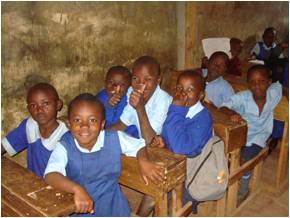
These kids come from day labor families. If you aren’t able to hustle a little bit of money that day, you don’t eat. There is no room to grow a crop. No cupboard to keep extra food. No savings account to draw on. There is nothing easy about this life, as far as I can see.
That children are able to give thanks to God for a chance to go to school and chose hope for their future seems like an absurdity. But they do. I think about these children a great deal nowadays. During the worst of COVID19, I kept imagining how the virus might spread like wildfire through Kibera. Amazingly, the residents—in partnership with the government—mobilized
and worked together to keep major outbreaks at bay through rigorous self-monitoring and new sanitation practices. Recently, the Lindi School building was destroyed by a fire. Thankfully, no one was killed by the devastation to the school was complete. Even so, the resilient community mobilized to find temporary space for classes and began the challenging work of finding local and international resources to rebuild and face into the future.
It seems so absurd—so hevel—that anyone should have to live this way.
By contrast, I think about the conversations I often have with people about DAFs (donor advised funds), CGAs (charitable gift annuities), and RMDs (required minimum distributions)—acronyms and concepts and even realities that are absurd to nearly anyone living in Kibera. Extra money? Return on investments? Taxable benefits to giving? How absurd!
Some days these feel absurd to me—in light of places like Kibera. But then I see and remember who often people I work with give generously out of the surplus. Others dig far deeper, and give out of their base of sufficiency. Then there are those amazing souls who we often think “give until it hurts” for the sake of others and to the glory of God.
In some ways, this is what Paul is writing about in 2Corinthians, chapters 8 and 9, where he invites people to give. “Pray about it,” he says, inviting people to do a bit of discernment and have a conversation with God about what they ought to do. Imagine that?!? He says some sow generously and others seemingly beyond their ability. Within a church struggling to live in harmony and trying to figure out how to care for one another’s most urgent needs, he calls all to give “cheerfully,” or as the Greek implies, in “hilarious and absurdly generous ways.”
When this happens, those who have little–now have enough. Those who have too much–now have enough. Miraculously, a connection is built between all of them. Hearts and relationships experience healing. Gratitude is expressed and God is praised. How wonderfully absurd!
As I have been reflecting on this passage over the last several months, I keep thinking it is not really a call to give until it hurts. Rather, it is an invitation to all of us to give until it heals. In the midst of a crisis and within a system of deep disparity, there is an opportunity to give, receive, and connect ways that bring healing, wholeness, and health.
Interestingly, hevel can also means “fleeting” or “like a vapor.” When the teacher says “life is meaningless” it may be better translated with this in view, rather than as “pointless.“ Life is, indeed, here today and gone tomorrow. This reality feels more true to me than ever before. Now well past mid-life, there is no point in splurging to buy a red sports car in a vain attempt to distract me from the inevitable. Hoarding feels rather pointless, as well. Our days are, indeed, numbered. For most of us, as we draw closer to the end of our lives our awareness of their fleeting nature intensifies.
These days, I am drawn by questions and opportunities aimed at making the most of the moment before it passes me, and us, by. So—
*Do I use my time in a way that honors God and blesses others?
*Are the resources God has entrusted to me being used to further the
work and witness of the Kingdom?
*Am I being faithful to God’s call upon my life and to exercise of the gifts I am given?
*Do I make the most of the moment by engaging in work what heals, helps, and adds just a smidge more hilarity–in the face of so much hopelessness, hate, and hevel?
Bless you, dear friends, as you seek to walk in the way!
 Walking in the Way and Stumbling Toward Faithfulness
4 responses to “Give Until it Heals”
Thank you for the questions at the end of your writing! They are needful questions to be considered if I’m to live my life to God’s greatest Kingdom potential.
LikeLiked by 1 person
Thank you, Jim. If there is any way to be of encouragement, please let me know.
LikeLike
Provocative (for me) especially the parts about “retirement planning” etc. Also, the pieces about “calling” (in retirement from one’s main “career”) and using one’s moments to bring healing.
LikeLiked by 1 person
Thanks for your thoughts, Warren!
LikeLike