When I received the invitation from ESR to consider serving as this year’s Perkins Family lecturer, I was immediately concerned for the Perkins family. You see, along with the invitation came a reminder that the previous speakers were Parker Palmer and Anne Lamott. So, of course, I thought, “Oh my gosh! The Perkins family has run out of money!” If we’ve gone from Parker to Anne Lamott to me, there must be some crisis. So, I immediately called our friend Jim to make sure he was all right and to offer to set up a GoFundMe account if needed. Apparently, the family is fine. There is still plenty of beef to eat in Kansas. There is still no explanation for what I am doing here.
More seriously, I am grateful to be together with all of you. Several people in this room and others listening online are partly responsible for who I am today. Through your friendship, influence, writing, eldering, and compassion, you’ve helped me become more faithful than I would otherwise be on my own. In addition, I am very thankful to ESR and the Perkins family for all you do to encourage and nurture the faithfulness and vitality of the Religious Society of Friends.
This evening, I intend to share less of a lecture and more of a confession and invitation. Nothing I will say tonight is likely new, though some of us may have forgotten bits and pieces of what it can mean to live in Life and Power. And others may have become distracted by the many other urgent matters that so easily occupy our minds, hearts, and time these days. Maybe this evening, we can put those off to the side to refocus on the One Reality that matters most.
Tonight, I may use words or images that some will find unhelpful or different from their experience. I don’t do so to disregard or diminish anyone. I am simply trying to speak as plainly and as authentically as I know how. So, I ask you to bear that burden as a grace for my weakness. I invite you to listen beyond the limits of my experience and vocabulary and allow the Spirit to connect our hearts in what I imagine is a shared desire to find the way, the truth, and the life that invites us further up and further in.[1]
During the Pandemic, I re-read some of the most formational books and writings I have in my library. At a time when so many others around me were deconstructing their faith, I felt drawn to reconnect with those texts and truths that had most formed and shaped me. I wanted to wrestle with them all over again, chew on them, mull over them, to see if I might catch another glimpse of God or hear that Whisper of Truth that once shook my soul and sent my life in a new direction.
And, sure enough, it happened.
Not always and not always in the same way, but I came away feeling moored and anchored to something more solid and real than all of the swirling cultural, political, and theological infighting going on during COVID. These dozens of texts helped me find my way through the crumbling difference between wrong and right and the growing chasm between right and left. By this, I am not saying I had a corner on the truth. Nor am I suggesting straddling the moderate tightrope as a serious approach to discipleship. As Tish Harrison Warren says, “Being a stubborn moderate seems antithetical to how Jesus lived. Very few moderates are tortured and executed by empires.”[2] Instead, I found help staying more centered in a world that felt increasingly off balance and a path through the growing maze and complexity of our world.
As has been my habit for the last 45 years, I sat with Scripture daily, hoping it would read me more deeply than I know how to read it. My pile of books included a hefty dose of mystics and early church writers. There was a wide range of theology, especially ecclesiology—that discipline which labors to discern what it means to be the people of God in the world. Central to that stretch of reading were numerous Quaker texts—journals from early Friends, letters like Margaret Fell’s An Epistle to Convinced But Not Yet Crucified Friends (maybe my favorite title of all time), and later authors seeking to interpret and explain our experience within the Religious Society of Friends.
All along the way, I kept stumbling upon different instances in which our foremothers and fathers kept pointing me to what I believe is crucial to our present and future vitality as a faith community. It can be summed up as a question: Do WE live in the Life and Power?
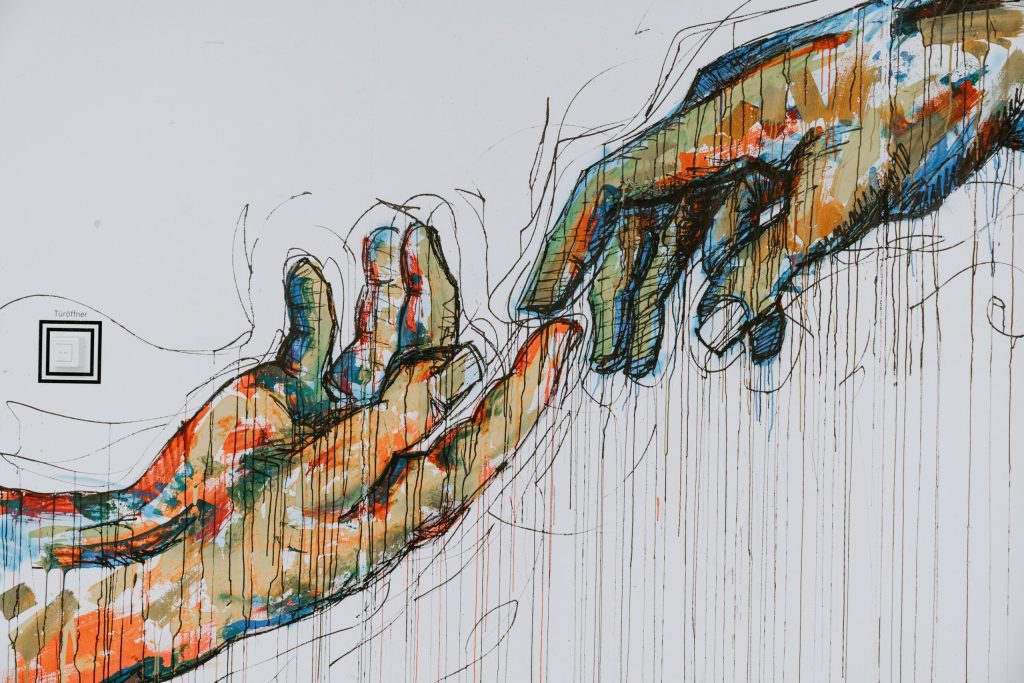
For early Quakers, this was the Life and Power that directed the prophets, apostles, and earliest followers of Jesus. It was the Life and Power that gave rise to the writings contained in the Bible. The Life and Power is what we are meant to stand in. It is to be our Source that shapes, forms, animates, and empowers our character and actions. Faithful spoken ministry arises through the Life and Power, whether prophetic or pastoral, public or personal. This Life and Power, the real Presence of the Risen and Living Christ in us (and in whom we are gathered this evening), leads us into Truth, steers us toward unity with God and harmony with others on a similar journey.
But this is not all. The Life and Power enables us to perform signs and wonders, overcome darkness, and dismantle systems of oppression and injustice. It draws seekers and convinces finders and enables us to walk in the way of peace.
In the Life and Power, I believe the constant and consistent biblical admonition to “fear not” suddenly becomes possible, for in it we have found the Perfect Love that makes no one afraid. And in these fearful times, this gift and ability seem important to nurture.
In the words of Francis Howgill, this Life and Power “knits us unto the Lord and one another, unites us with one another, is the fire that kindles our hearts to serve the Lord while we have our being, and forms us to be a people for God’s praise in our generation.”[3] I love that! This Howgill quote and evidence of this reality being lived out within the first Quaker meeting I attended convinced me to make my spiritual home among Friends 40 years ago.
The more I read throughout the pandemic, the more this phrase “Life and Power” kept showing up, not as a simple literary device but as a phenomenon—an existential reality present and available to those who yearn to experience it and learn to yield to it.
In The Power of the Lord Is Over All: The Pastoral Letters of George Fox, Canby Jones notes that Quakers frequently say that Fox’s central teaching was that there is “that of God in everyone.” But this phrase appears only 108 times in his writings. However, variations of the “Power of the Lord” appear 388 times, the single most often used phrase in his Journal.[4] I have long been puzzled over why I hear so few Friends focusing on this reality.
So, I want to ask you, dear ones: “Do I live, do you live, and more importantly, do WE live in the Life and Power?” If you find nothing else worthwhile from our time together this evening, I invite you to ponder this question, as if your life and our life together depended on it.
Let your soul answer: Do you live in the Life and Power? What about your local meeting or church? Your Yearly Meeting or Association? What is the Spirit whispering about the whole of the Religious Society of Friends—are we living in the Life and Power?
Now, I hope you are feeling a bit uneasy at this point. Why on earth is he talking about centering ourselves in God when the world is crumbling? Do we really need to speak of our love for God when our neighbor is in crying need? Isn’t that expression of love—for neighbor, the outcast, the marginalized, the poor, and the injured—the essential part of the Great Commandment?
Especially at a time when Gaza is in rubble, when our immigrant neighbors are so fearful and in danger of being deported, and when our communities are on fire, when climate change, racism, and a holy host of other crises are gripping us—is now really the time to look inward? These are meant to be searching questions we should sincerely consider.
I don’t know for sure. I was, however, recently sitting with a young Friend who wanted to talk about everything happening in our world. In her body, she was holding the fear and anxiety that feels so prevalent in our time. That fear of what could happen. Of all the things outside our control. Of feeling unable to make a difference or know how to be relevant or appropriately responsive, and maybe worrying that if she didn’t stay active, no one would notice how much she cared. This young Friend feels a gnawing anxiety to do something, to do anything!—to relieve some of the stress and interrupt her despair. This mix of paralyzing fear and compulsive anxiety is twisting her in knots. She said, “I feel like so many people around me are teetering on the edge of despair and hopelessness, and I don’t know how or if I can help them.” Does that sound like anyone you know?
More recently, a young activist called me one night and asked to visit. He is a former Quaker—one who gave up on us, in part because he felt we gave up on him. He was so turned off by our divisions and infighting. But today, he is burning out, trying to figure out how to have a sustainable life while giving sacrificial energy to the people, projects, and problems central to his sense of purpose and priority. “I feel like I have lost my Center,” he said. “I am doing this all on my own strength and failing. I know I need to step back and recenter, but I am afraid no one will understand, and no one will step in for me.” Does this sound like anyone you know?
“Are you living in the Life and Power?” is not just something to say to these and others I meet; it feels like everything I can say to them. In these fearful and divided times, we need something more than better coping mechanisms and improved strategies for social change, though both are crucial. What feels even more essential, I believe, is a renewed immersion into the Life and Power of the Living Christ—that will sustain, animate, empower, and direct us amid our chaos and calamity.
I expect most of us in this room know people like the ones I have mentioned. Maybe YOU are feeling frantic, hopeless, fearful, or anxious. Perhaps you feel numb, about to shut down, ready to run away, or overcome with rage. Maybe you keep butting up against the limits of your own wisdom, strength, capacity, and even compassion. Whenever I find myself in that moment, I turn to one of those mooring/anchoring texts that help me find my way through. In this case, it comes from Thomas Kelly’s The Eternal Promise. Many of you will know this well. I am lifting some selected phrases from his brilliant chapter, “Hasten Unto God.”
“The times are severe, the need is great, and we must hasten we all agree. But whither shall we hasten? Two directions, in order to plumb the depths and scale the heights of life. We must hasten unto God; and we must hasten into the world. But the first is the prime need; though the world be aflame by its own blindness and hate, and narrow ideals. We must first hasten unto God.
Hasten unto God. Why? Not because we ought to. Fellowship with God isn’t a bitter duty. Fellowship with God is the deepest joy of human existence. It is the Pearl of Great Price, for which we should sell all we have, and in joy, purchase the pearl. You and I are not full selves until we are in God’s Presence, and He is visibly in us, alive, energizing, glorying, making life miraculous. We Quakers have become earthy. We are more at home with humans than we are with God. We have people of burning social passion, but not so many that burn for God, long for God, and go down deep into the Waters of His Life.
The Center of religion is in a living, vital, unspeakably intimate fellowship of the soul with God, wherein we sing and dance and laugh in God’s Presence. Some of us have found this life…some have never even guessed that such a life with God is possible to make all things new. If we knew God’s Glory and Power in full immediacy and walked daily in humility and erectness of soul…this light and glory would shine out from us…and we should shake the countryside for 10 miles around.”[5]
Our need to hasten unto God before and while we hasten into the world is not for God’s sake—it is most assuredly for ourselves and those we seek to serve. God knows no one needs my limited wisdom or meager gifts and abilities. My shallow reserves of compassion and aging energies feel woefully insufficient to respond to the needs among my closest circle of contacts, let alone a world shuddering under the weight of pain, hopelessness, isolation, and fear.
Not every day—but many days—I feel like I am doing my level best, running as fast and hard as I can or know how. On my own, I cannot do any more, and I have learned over time that struggling and striving to do more or somehow be more is a hopeless and soul-killing endeavor that winds up hurting more than helping anyone. As I have learned to face into this reality over the years, I am coming to love and own two words as I learn to stumble toward faithfulness: Yearning and yielding.
Yearning—which in this context I describe as a tender and resolute longing to be—to be in Christ, to know and be known, to be cracked open, refashioned, and made complete. And by yielding, I don’t simply or necessarily mean stopping or waiting, but surrendering to that Spirit in which we live and move and have our being, not as an abstract theological expression or quotable verse but as a moment-by-moment reality.[6] This is how we are meant to live in God.
In those moments when yearning for and yielding to God find their equilibrium—held together in the paradox of willing faith and undeserved grace—I feel like my heart just might burst or my soul will explode. In those moments, I feel found and free. Instead of struggling or striving to be or do something for God, there is a sense of being lived through in the moment. There is a sense of being yoked and united with Christ, in which his Life, Power, Light, and Love are released through me for the good of others and the glory of God.
Robert Mulholland, author of the excellent Invitation to a Journey, offers wise counsel for those of us more tempted to rely on our strength and wisdom. He writes, “We are not called to be in the world for God…rather, we are called to be IN GOD for the world.”[7] Increasingly, I am convinced this subtle yet profound difference in understanding is central to truly empowered ministry and authentic living. At a time when frantic and frenzied self-effort or fearful and frugal passivity muddle and disempower our witness in the world, it feels essential that we learn this distinction.
You know, in all my years among Quakers, no one has ever asked me, “Colin, are you living in the Life and Power?” I’ve had caring friends ask about my soul, such as whether I am practicing good self-care or not. I’ve had more than a couple of Friends wonder about the state of my soul, but their concerns were more theological and eternal in nature! Many Friends ask about my health, whether I like my work, or whether I am getting enough exercise and eating right. A few Friends have asked how my investments are doing and, more recently, how soon I plan to retire. Over the last 10 – 15 years, the most common questions revolved around my political activity. Have I registered? Did I vote? Am I going to the protest? Will I write a letter to my representative?
All are good and useful questions, but none point to the heart of the matter: am I yearning to know and learning to yield to the Life and Power?
Yearning for and Yielding to God:
Maybe this work begins—as it always does—by starting where we are. Here. Now. Not waiting until the weather changes or the stock market is up or when we can seize the opportunity to get “our people into office,” but by encountering Christ in the only moment that is certain—this one. So, I invite all of us to rest in these words from Isaac Pennington’s Some Directions to the Panting Soul:
“Give over thine own willing, give over thine own running, give over thine own desiring to know or be anything, and sink down to the seed which God sows in thy heart and let that be in thee, and grow in thee, and breathe in thee, and act in thee, and thou shalt find by sweet experience that the Lord knows that, and loves and owns that, and will lead it to the inheritance of life, which is God’s portion.”[8]
We know this practice and life pattern of sinking down, giving over, and receiving is radically different than striving, frenetic activity, or force of will. It is the doorway to abiding. It allows the Real Presence of Christ to take root in us, feed us, and strengthen us with that divine power (dunamis, akin to dynamite) available through the Presence of the Spirit, if we but remember to abide in it.
And, so this evening, I offer myself and those who may need it the simple reminder from Sarah Jones in 1650 “to sink down, stand still, to wait where the power is to be found.”[9]
I know we certainly live in a time when we must also stand up, show up, speak up, and act up. We need individuals and communities of Quakers who will oppose oligarchs, call out injustice, get in the way of potential harm, and cause good trouble. We must have prophets with the zeal of an Amos or a Micah. We need creative leaders who fight for justice with the tenacity of Martin Luther King and wage peace in the spirit of Tutu and Mandela. I am so grateful for the countless ways Friends have modeled this work throughout the centuries, including the most recent collaborative effort to stop our government from entering places of worship to detain and deport immigrants. Spirit-led resistance and prophetic witness are integral to our spirituality.
For many Quakers, doing more stuff is not our issue. We pray, protest, worship, write letters, lobby, love, serve, and share. We give money, time, and energy to causes, communities, and concerns we care about and feel called to by God. For the most part, we are a people of faith who show up and seek to be involved in the world in ways that matter.
But how much more powerful and lasting is this witness, and is our prophetic voice, when it does not arise out of fear or nervous anxiety? And how transformative is it when it finds its source in the Life and Power that overcomes the world and overwhelms the gates of hell? Then, it drives out the darkness. It shatters the spear and breaks the bow. It topples rulers, kingdoms, and empires. It releases the captive and proclaims justice for the oppressed. We see it reconciling and restoring all creation and announcing good news, grace, forgiveness, and new life to the poor, the poor in spirit, and even to poor, sorry sinners like me and like you.
And so, I keep asking the question, do we live in the Life and Power? Do we yearn for it? Are we willing to yield to it? I confess that the responses I have received have not necessarily been encouraging. Some of us are so tired, outraged, anxious, and busy that we cannot imagine it. Others feel like it is all they can do to keep their lives from coming apart. A few weeks ago, I was speaking to a board of directors for an organization, and someone asked about the topic of this lecture. I mentioned it was about yearning for and yielding to God. The silence was deafening—until one person said, “Yielding feels very hard these days.” Another added, “I don’t think I know anyone, including me, who truly yearns to know God right now. Our attention is elsewhere.”
Over the last few years, I have heard other people express similar sentiments, including a group of peacemakers I spoke to at a retreat. They agreed it feels like we are constantly reacting, ping-ponging these days from one issue to the next, rather than staying rooted in God and focused on the work that is ours to do. One lamented, “We never seem to gain any traction or make a durable and transformational impact in the world, because we are so scattered and shallow.”
Even so, we are people who know something about yearning and yielding. Whether young or old, I imagine all of us here can recall a time when we could say like the writer, 1 John, “That which was from the beginning, which we have heard, which we have seen with our eyes, which we have looked at and our hands have touched.”[10] We have known and been known the Living Christ, so profoundly we have felt it in our bones and in ways that have set our hearts ablaze. That Presence healed some of us here, turned our lives upside-down, and inside out. Gave us grace-healed eyes that allowed us to see ourselves and others differently. Maybe in those moments or in that extended season of life, all creation smelled as never before, beyond what words can utter.[11] And in that power and light and life—we felt ourselves being renewed up into the image of God. Does that ring true for any of you? It does for me, despite feeling I still have so very, very far to go in this journey.
I have been reading a piece from Soren Kierkegaard and praying it over you and me each day for several weeks in preparation for being here, as a hope for us.
Father in Heaven, what are we without you? What is all that we know, vast accumulation though it be, but a chipped fragment if we do not know you? What is all our striving? Could it ever encompass a world, but a half-finished work if we do not know you? You, the One who is one thing and who is all. So may you give to the intellect, wisdom to comprehend that one thing.
To the heart, sincerity to receive this and this only;
To the will, purity that wills only one thing. In prosperity, may you grant perseverance to will one thing;
Amid distraction, collectedness to will one thing; In suffering, patience to will one thing. You that gives both the beginning and the completion. May you, early, at the dawn of the day, give to the young the resolution to will one thing
As the day wanes, may you give to the old a renewed remembrance of that first resolution,
That the first may be like the last, and the last like the first
In possession of a life that has willed only one thing, to know God.[12]
Whatever the Religious Society of Friends needs—and we need many things—one of the more pressing needs, I believe, is a cadre of saints who know and live in God—in the flaming heart of God. Friends who yearn for and yield to that One Thing—that Reality we can sink down into so that our lives can be founded upon it and rooted in it. Where joy and peace empower us in ways youthful idealism never can. Where sturdy wisdom and strength carry and sustain us against the inevitable pull of cynicism, apathy, and exhaustion that will otherwise lull us into indifference. We need people, whether young or old, who are alive—fully alive in God, rather than comfortably numbed by and blind to the pain, suffering, brokenness, and (can I say it?) sin and evil that surrounds us.
I believe we need and our world needs Friends who will hasten unto God, sinking down so deeply into that Life and Power, that we arise empowered and directed to be the people of God, able to discern and do the work and witness needed in the world.
Creating Laboratories of Faith:
I would love to say that is enough—for each of us here to do this personal work—but I don’t believe it is, especially if we want to imagine a sustainable and vibrant future for the Society of Friends. It is my sense, anyway, that this kind of life rarely, if ever, happens by accident or in isolation. It is cultivated within an intentional community.
For good or ill, Quakers are a DIY religion. We expect people to do it yourself (whatever the “it” is). There are exceptions, of course, even great ones, where Friends work diligently to nurture people into a life of knowing God, love for one another, and how to engage in Spirit-led service. But just as often—or more—we expect people to find their own way to our fellowships and figure out how to get acquainted and involved. And Lord knows, we can’t directly invite anyone to worship or make their home among us; it might set off our allergy to evangelism and our phobia of proselytizing.
Few Meetings and Churches offer instruction or mentoring to deepen a life that genuinely abides in the Presence and Power of Christ. We often expect people to learn how to do individual and group discernment by osmosis—and then are frustrated when our Meetings for business blow up in conflict. Too often, we offer little or no training in leadership or how to identify and cultivate spiritual gifts. Really practical—and deeply spiritual topics—like how to resolve conflict in healthy ways, how to be faithful and generous stewards of money, time, possessions, and talents, how to study the Bible, how to pray, or discerning a call to leadership or ministry—get very little attention.
Now, I know that for some people, this approach works—It is Quakerly! “I don’t want anyone to tell me or presume to teach me what I need to know. It was good enough for George Fox—so it is good enough for me!” Right? If we learn to rely on others, we may never learn to rely on the Spirit.
I question this assumption, however, by reminding us that not everyone is a George Fox. Some of us, like me, needed the help of others. When I came to faith, I was also at the end of my rope. I felt utterly lost, but “seeking” on my own was leading me nowhere, except closer to death by overdose or my own hand. In my experience, many of us need or our at least are helped by someone willing to point them in the right direction, offer an invitation, leave a few markers, or create some helpful handholds. They benefit from someone walking alongside them when it comes to experiencing God. Frankly, many people are looking for a fellowship that offers meaning, purpose, support, guidance, accountability, and community, and would love it if someone would help them find it.
Sometimes, I fear we Quakers take the idea “that there is One who can speak to our condition” to an illogical conclusion. We assume no one can or should assist us in knowing and following Christ, and we leave people floundering on their own. Add to this the shadow sides of our Western individualism with extreme versions of Quaker egalitarianism, and we create congregations that are much more a collection of individuals rather than a shared community. And again, this works for some people, especially those I hear say, “I love being a Quaker because it means I can believe whatever I want and do whatever I please.” But for the many people looking for a discernible and describable faith, and life in community that can be coherently named and clearly navigated, the notion of it being whatever you want it to be is often experienced as nonsensical and unhelpful.
My dear friend, Scott Wagoner, will offer a response to this evening’s lecture. I am so looking forward to it. Along with his sharp insight and seasoned spirituality, Scott will help interpret my ramblings. I won’t mind—or be surprised—if he says. “I think what Colin meant to say was…”
Scott and I have been working on a project called Flourishing Friends over the last couple of years. Partnering with a cohort of leaders from each meeting, we encourage them to discern what flourishing looks like in their context and how to begin moving in that direction. In addition, I am an adjunct instructor through the Lake Institute, part of the Lilly Family School of Philanthropy, where I facilitate workshops around cultivating generous congregations. One of the central pieces to both approaches is encouraging a local fellowship to identify its clear sense of purpose or mission. This isn’t about having a one-sentence mission statement emblazoned above every doorpost or requiring every member to memorize a catchphrase or have a slogan tattooed on their body.
It certainly isn’t about crafting a tidy theology or requiring a uniform discipline among the members. Just a clear sense of why this congregation exists. It is about knowing who you are called to be and what you are called to do, and cultivating the ability to articulate it in clear, consistent, concise, and hopefully compelling ways.
This kind of clarity helps us remind ourselves who we are to be and what we should be doing. It empowers us to know what to say “yes” to and “no” to, even if we do so grudgingly. With this kind of clarity, we can meaningfully invite others into something discernible and experiential. Knowing our clear sense of “why” can help us worshipfully discern how this mission is to be lived out, integrated, and embodied in all we do and say within the shared life of a faith community. And—not always—but often, it can be beneficial, hopeful, empowering, and sometimes even healing for congregations who may be floundering or diminishing.
Having said that, I can’t tell you how many times a group of Quakers has told me, “Oh—we can’t have that conversation here. It will divide us…” Really!?! While this may be true, I wonder what it says about us. Perhaps the fragile nature of our communities reveals something important about the depth of our shared experience of God, or how well we have cultivated the discipline of listening to the Spirit together, or resolving conflicts. Maybe our fear of division reveals something essential we ought to lean into and develop, not shy away from.
For the past 35 years or more, I have been privileged to traipse around the Quaker world. During that time, I have been to more than 50 different yearly meetings and visited hundreds of local meetings and churches. In the many conversations I have had with Friends in the pews, the most common concern I’ve heard expressed (across the theological spectrum) is, “We don’t really know who we are or what we are called to do as a community.” Friends often identify this lack of clarity as an unhelpful hindrance within their fellowship—a source of conflict, an irritating distraction, a source of confusion, an impediment to inviting others to participate or engage in shared service.
In my work world, the research is clear that our ability to raise the funds needed to live out our mission is negatively impacted when we are unclear about our mission, priorities, and goals. People want to know what resources support, how it intersects with their values and faith commitments, and what difference it makes. We often struggle in this area, partly because we struggle to articulate our shared sense of who we are and what we do, and because we are so reticent to talk about money. In many Quaker circles, this is a strong taboo.
All of these things add up to create, in many places, Quaker gatherings who say they feel like a collection of individuals all doing their own thing and each on their own spiritual journey, more than one that is becoming a faith community—one being formed together in the life and power, and engaged together in active service, witness, and community life.
Externally, having the courage to articulate who we are and what we do makes it more possible for others to engage with us and know what we are about. Did you know, for instance, that roughly 80% of people first go to a congregation’s website before ever attending worship?[13] Especially in the case of young people, they want to know what a group says about itself—why it exists, their values, and how these are lived out in acts of compassion and community engagement. In the minds of most potential visitors, offering this kind of clarity and information is about being transparent, having integrity, and being welcoming and invitational.
Since the pandemic, most religious traditions have experienced a decline in worship attendance and congregational participation. My generation—the Boomers—disappeared more than other demographic groups. Apparently, for many of us, there wasn’t much more than habit keeping us. Interestingly, there has been a rise in the number of young people reportedly open to spirituality—and even religion. Millennials, that group of younger-ish adults ranging from 28 to 43, are one demographic with a growing number returning to houses of worship and faith communities.[14] Why? I don’t think we know for sure. Some of it may be correlated to the rise in Christian nationalism, but other seekers resonate deeply with the values, convictions, and spirituality of Friends. Anecdotally, I have heard many younger people say they are looking for community, hungering for authentic spirituality, wanting to invest time and energy in something that is making a difference in the world, and trying to find help managing family, finances, housing, loneliness, anxiety, fear, and hopelessness. They are looking for God and people to belong to.
Do we have anything to offer? Do we even have a clear, coherent, consistent, and compelling message and invitation that we not only post on our website but, more importantly, is embodied in our lives and life together? These conversations are crucial if we want to help our current people find meaning and purpose and connect with seekers looking for the very thing we have to offer.
Part of the joy I find in ministry is helping congregations, yearly meetings, and other groups have these kinds of conversations. In our case, Scott and I don’t come in with “six easy steps” or a pat answer. Personally, I don’t think there are 4, 6, 12, or even 666 easy steps to anything significant.
Jesus calls us not to adhere to a program or a set of principles. We are not called to a specific social agenda and are certainly not tasked with legitimating or upholding a particular political agenda. He says, “Follow me and seek first the Kingdom of God.”
For Meetings and Churches that struggle to name or live deeply their sense of mission or purpose, I sometimes remind them there are common themes found within the New Testament and amazing examples within church history and our own Quaker tradition around what makes a faith community distinct from a social club, service organization or other non-profit. It is a model I use as a discussion starter to help folks think about why they exist.
I borrowed this from a lecture by Henri Nouwen, which I listened to years ago. Henri used a triangle to talk about a healthy congregation’s point, purpose, shape, and structure. This is my adaptation of Nouwen’s model—and it has resonated with some Friends. Maybe it will with you as we think about creating fellowships that intentionally live in the Life and Power.
I think the work of a healthy, vibrant, faithful, flourishing, and growing congregation falls into three interrelated categories—that I describe with the word: Communion, Community, and Ministry. Please don’t get hung up on those words, however. Consider the ideas behind them and come up with better, more descriptive ones that fit your fellowship.
Communion—a word that makes some Quakers uncomfortable—is simply (and not so simply) the way we cultivate and deepen our life with God. Jesus said humans don’t live by bread alone, but by feeding on every word—the proceeding, eternal word of God that speaks to us in time, and when we are listening, on time. Through our abiding in the True Vine, we find the sustenance we need each day and the capacity to bear fruit that will last and benefit others.
Again, this does not happen accidentally. It is cultivated and nurtured intentionally in communities that know and understand this is central to their life together. What I find most compelling about this vision of communion is that it is not just for individuals. Rather, collectively, we are meant to grow together into the image of the One we know and follow—something the Apostle Paul repeatedly highlights as integral to the life of faith. Re-read his letters and notice his preoccupation with our being bound together in the covenant of peace, knit together in and by the Holy Spirit, being reformed and shaped into an alternative society that embodies the nature of God.
What holds this community together is not common political affiliation, class, culture, or socio-economic homogeneity. Neither is it a uniform doctrine that everyone has signed off on. No, we are held together in the Christ, whom all are yearning to know and yield to; and in doing so, experience a unity that transcends and transforms diversity, rather than diminishing or destroying it.
So, my question to a Meeting/Church that sees “Communion” as integral to why they exist is, how do you intentionally and faithfully nurture a deeper intimacy and experience of God?
This kind of Communion naturally leads to Community because the love of God ALWAYS expresses itself in love for the sisters and brothers to whom we are joined in God. Within the crucible and laboratory of koinonia, in which we are gathered into a shared life, we are being formed into the Beloved Community, a living, embodied fellowship of would-be saints, living into the grace and discipline/gift and practice of loving one another, in the same way God has loved us.
When I first became a follower of Jesus, I was stunned by how often the New Testament focused on loving, forgiving, bearing the burdens, praying for, sharing with, persisting alongside, and laboring with the members of the Body. I kept thinking, shouldn’t we be focused on those who don’t know the grace of God, who are hurting, vulnerable, poor, and dying?
But as I got involved, I found how deeply challenging gospel love really is. Within the community of Christ, we are called to lay down our lives for one another. Re-read the “one anothering” passages scattered throughout the New Testament, which describe and define the contours of a faithful fellowship. Frankly, it is rather overwhelming. In my mind, creating this kind of community requires our best energy and most intentional focus, not the leftovers we often give it. According to Jesus, others will be able to look at our lives—the day-to-day way we treat one another—and conclude we are, in fact, his disciples. “By this,” he says, not the clarity of our doctrine, the purity of our social testimonies, and certainly neither how well we align with any particular political agenda—but “by this love in action,” the world will know whether or not we are his students. This is the acid test. When folks look at the Religious Society of Friends, I often wonder whether they think, “I see the Presence of Christ,” or simply mutter, “Oh, Jesus…”
In either case, how much does your Meeting or Church focus on the priority of becoming a faithful community? How is this being nurtured, taught, mentored, and held up, not just as an aspirational goal, but something we work on intentionally through our pastoral care ministries, benevolence, practical support, life-skill training, in the way we commit to stand with one another through our joys and sorrows, conflicts, disagreements, failures, and flaws.
In this community, we are formed and reformed. In community, we find out how stinking hard it is to love others in the way Christ has loved us. In community, we meet up with others we will struggle to love, forgive, bless, and extend patience.
As Dietrich Bonhoeffer said, in community, we often meet the person we struggle with the most.[15] But it is this person, when they get so far under our skin we can barely stand it, that we may begin to understand something of God’s love for us. Through this severe mercy, we deepen our dependence on God for the grace and sacrificial love needed for the difficult brother or sister (who may be me!).
I understand why so many people leave the church “disillusioned” by it. Community is challenging. But as Bonhoeffer suggests, disillusionment can also be a gift.[16] Now, we no longer live under the illusion of what we think an ideal “community ought to be.” Life together is hard and real. It requires immense grace, patience, sacrifice, and courage to live in and form the kind of alternative society imagined in the New Testament. People often seem so shocked or dismayed when there are conflicts in the church. Really? We are surprised? Has no one read the damn book?
The Bible is a story of conflict among people trying to discern the mystery of God in the concreteness of our lives. It is us, right?!?—trying our level best to know and follow Ultimate Truth, when we still have so much to learn. I argue that what makes us distinctly Christian is not that we never have conflict, but how we work together to resolve it. It is in this process, and in the way we care for, pray for, and support one another, that the genuineness of our faith is revealed and our shared life with Christ is deepened—not by the avoidance or absence of conflict or controversy.
Both our Communion with God and life in Community naturally move us into Ministry beyond ourselves. Again, love ALWAYS reaches out. Ministry—at least by my definition—is how our Meetings and Churches proclaim and demonstrate the good news we have come to know, especially those who are otherwise harmed and hindered in the world. In this context, beyond what any individual may be called to do, this is our collective work, the priorities and concerns we are led to focus on together in our time and place. This work helps define our impact in the world and also helps form and shape us through the praxis of a shared and mutual ministry.
Ministry is the expression of our gifts and service to the world, rooted in our understanding and experience of who God is and what the Spirit is doing in our time and place. I am convinced that our willingness to sink down into the Life and Power of Christ makes us neither meek nor hesitant. Instead, it empowers and emboldens us to action. Furthermore, I am convinced that as we are centered in fellowships that intentionally nurture a shared life of communion, community, and ministry, we are less apt to find ourselves merely responding to one new crisis after another, but rather remaining centered in work and witness that is ours to own and hold.
Yes, there are moments in time when a concern or emergency demands our immediate attention and action. In these moments, we must pause and refocus. But I’ve wondered whether we allow the urgent, especially when it is sparked by the anxiety and fear of the culture around us, to drive and divide our attention, rather than remaining committed to what we have been given? And so, I will ask you—does your Meeting/Church discern and act together in a spirit of shared ministry? If so, how do you invite, equip, and release Friends to engage in it?
Again, please don’t get bogged down in my descriptive words of communion, community, and ministry. They are my shorthand way of saying that fellowships which nurture living in the Life and Power together tend to focus on deepening their love and experience of God, lean into the gift and discipline of becoming the Beloved Community, and intentionally devote themselves to the work and witness the Spirit calls and empowers them to in their time and place. And it is my conviction that our world is hungering for this kind of church—and it is the most important work we can do.
Years ago, Lesslie Newbigin wrote an excellent and essential book titled The Gospel in a Pluralist Society. He argues persuasively for an embodied and invitational communal faith in this and other writings. Our role is not to impose our values on society but to offer a living alternative, coherently expressed within cultures and communities that are increasingly complex. Newbigin writes:
I have come to feel that the primary reality in seeking Christian impact on public life is the Christian congregation. How is it possible that the gospel should be credible, that people should come to believe that the power which has the last word in human affairs is represented by a man hanging on a cross? I am suggesting that the only answer, the only hermeneutic of the gospel, is a congregation of men & women who believe it and live by it. All our other activities are secondary and have the power to accomplish their purpose only as they are rooted in and lead back to a believing community.[17]
This should speak to those of us who are Friends. We have often said we must be possessors rather than mere professors of the truth. This means it is a Lived Reality—embodied in who we are and what we do. At our best, we ought to be the believing community one can point to and say, There it is! Here is the proof in the pudding that the mission and message, the Life and Power we hold so dearly and profess with courageous humility, is, in fact, true because it is visible in us.
The publicity for this evening included a quote from one of Fox’s epistles. He writes:
Friends all everywhere, in the life and power of God live and dwell, and spread the truth abroad. Quench not the spirit, but lie in love and unity one with another; that with the wisdom of God ye may all be ordered to God’s glory… And live all as the family of God in love, in life, in truth, in power…[18]
May this be true of us in increasing measure.
[1] Lewis, C.S. The Last Battle, HarperTrophy, 2000, pp. 195-197.
[2] Warren, Tish Harrison. Jesus Changes Everything by Stanley Hauerwas, Plough Publishing House, 2025, p. xi.
[3] Howgill, Francis. (1618–1669), one of the Westmorland Seekers, described the sense of communion engendered among these early Friends: 19.08 | Quaker faith & practice
[4] Martin, Scott. Friends Journal, 2001. ‘The Power,’ Quaking, and the Rediscovery of Primitive Quakerism – Friends Journal
[5] Kelly, Thomas. The Eternal Promise, Friends United Press, pp. 72-73.
[6] Acts 17:28
[7] Mulholland, Robert. Invitation to a Journey, Intervaristy Press 2016.
[8] Pennington, Issac. https://qfp.quaker.org.uk/passage/26-70/
[9] Jones, Sarah. “This Is Lights Appearance in the Truth.” Mary Garman, Judith Applegate, Margaret Benefiel, Dortha Meredith, eds. Hidden in Plain Sight: Quaker Women’s Writings 16501700. Wallingford, PA: Pendle Hill Publications, 1996.
[10] 1John 1:1
[11] Fox, George. The Journal of George Fox, Capricorn Books, 1963, p. 97.
[12] Kierkegaard, Soren. Taken from Devotional Classics: Selected Readings for Individuals and Groups (Richard J. Foster & James Bryan Smith, Editors. HarperCollins, 1993.).
[13] https://theleadpastor.com/article/church-website-statistics/
[14] Millennial Church Attendance and Trends According to Barna Research – Apollos
[15] Bonhoeffer, Dietrich. Life Together, HarperSanFrancisco, 1954.
[16] Bonhoeffer, p. 26-31.
[17] Newbigin, Lesslie. Gospel in a Pluralist Society, Wm B. Eerdmans, 1989,p. 227
[18] Fox, George. Epistle 150
 Walking in the Way and Stumbling Toward Faithfulness