One of my favorite songs is the hauntingly beautiful For a Dancer by Jackson Browne. The lyrics include:
I don’t know what happens when people die.
Can’t seem to grasp it as hard as I try.
It’s like a song I can hear playing right in my ear, But I can’t sing, I can’t help listening.
I confess it is only recently that I’ve considered death this way. Life, specifically life with God, has been that mysterious melody playing faintly in my ear. Always just loud enough not to ignore it without trying…but puzzling enough to wonder if I would ever learn the tune, let alone any of the words. I heard life—not death—humming in my head and muttering under my breath.
More recently, however, thoughts do wander to what happens beyond this existence. Oh, I have ideas, hopes, and musings—but mostly, my curiosity has now been piqued in new and different ways with time.
Jackson Browne is not always a great theologian, but many of his songs wrestle with essential questions. His spin on love, loss, pain, spirituality, and the interpersonal and ecological damage we sometimes manage to exact upon each other and the planet often captures my attention. For a Dancer is no exception. In it, he speaks to the human experience of loss and the importance of cherishing our little time.
Browne goes on to sing,
No matter how close to yours
Another’s steps have grown
In the end, there is one dance you’ll do alone.
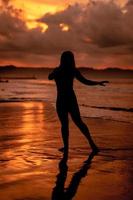
In a certain sense, the songwriter is right. At that moment of death, the experience is ours alone. We get to—have to—must endure whatever last breath shudders through our lungs and that final heartbeat to murmur about our bodies. Though we are surrounded by loved ones and encircled in a cradle of prayer, at least if we are conscious, I expect there is an awareness that the very last step in the journey is the one no one else can take for us or with us.
At this moment, I am confining my thoughts to this side of the veil (which I hope is easy to pass through. I am likely the guy who will get his cane caught in it, only to stumble and fall into one of the candles lighting the way. Pyrotechnics on the stairway to heaven might be a showstopper at a Zepplin concert, but probably not so much at Heaven’s Gate. Besides, flames and billowing smoke might confuse those still waiting to get in…). Much could be offered about the God who awaits us and, more likely than not, meets us in the moment of death. But that can wait until another time.
A sad reality is that some people do die alone. I read recently that the estimated incidence of sudden unexpected death may account for approximately 10% of all deaths classified as “natural.” This is different than deaths due to violence, warfare, or disasters. Among those 10% of natural but sudden deaths, I cannot find any reliable figures of how many of those people pass away alone. Of course, I have no way of knowing, but I wonder if, in God’s great grace and mercy, He is there for such people in more vivid and comforting ways than the rest of us.
I know people who argue this is the best way to go—without any preparation or warning. Just get it over with and avoid any of the fear, dread, heartache, and physical or emotional pain involved. There is something to be said for this. While watching some of our friends and family labor in their dying days, I have considered the possible benefits of some instantaneous ending—a bolt from the blue—that brings down the curtain without a moment’s notice.
At least one of the problems with this, however, is that we don’t really die alone. Whether suddenly or over time, we pass away within a context—a community, clan, family, partnership, or circle of friends. Having known several people who did die suddenly, the impact on their loved ones was often overwhelming. One person writes, “For the survivors, unexpected death brings out feelings of anger, despair, and unfairness. It can be devastating, disorienting, exhausting, shattering, shocking, and traumatic, and often challenges entire belief systems.”
We are not designed to die alone, even if that final moment is a solo move. Yes, it happens on occasions, but this feels like an unhappy anomaly—a glitch in a system still recovering from the consequences of human rebellion rather than some divine malice or incompetence. We spend our lives learning to live—to dance—with others. Despite the American emphasis on individualism, we are social beings, meant to be with and for one another in community. We are members of one another, especially within the Body of Christ, helping one another collectively grow into the image of the One we know, love, and serve. And as much fun as it is to rejoice with one another, as the Bible instructs, more profound meaning is often experienced when we take the time and invest the energy in mourning alongside those who are suffering loss, pain, and death. In being together, we have the chance to embody and experience the love of God at work in us and through us.
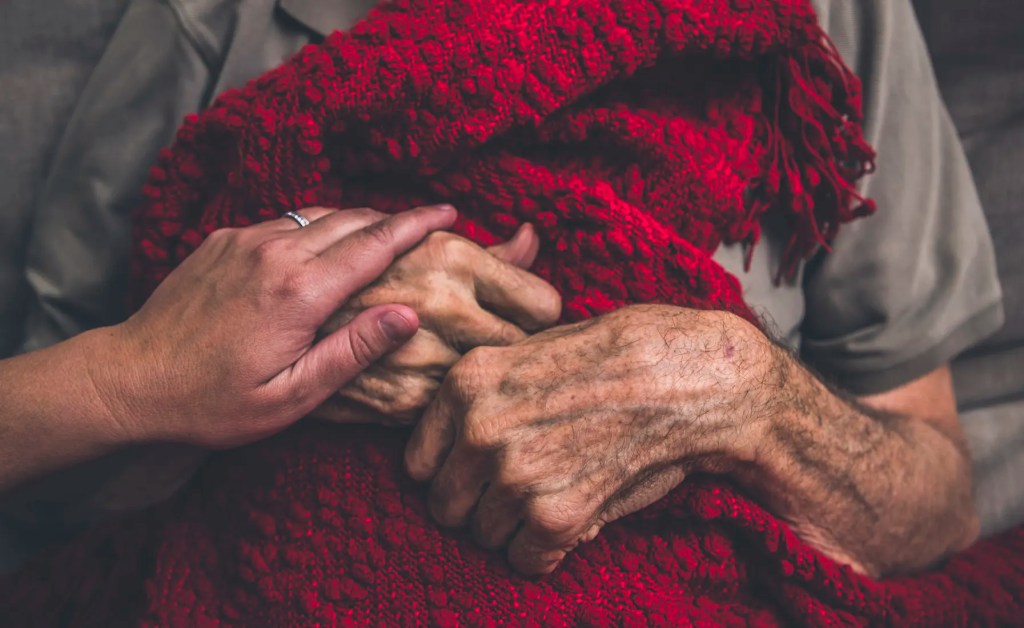
My father was a rather grumpy and lonely old man in his final days. As he grew older, my sister and I tried to converse with him about his care, end-of-life desires, etc. His typical response was, “Just drag me out to the snowbank when the time is right.” The fact that he lived in a moderate climate with lots of rain but little snow made this an inconvenient and unhelpful answer. In one of my lesser moments, I thought about filling the back of my truck with snow in the winter and unloading it in his driveway before asking him this question. When he inevitably brought up “the snowbank,” I would lead him outside for a “surprise.” He would have thought it was funny…or buried me in it.
We took him to the hospital one last time—knowing he would not go home. My mother had passed away years earlier, and dad had no circle of companions. He was not part of any group that might otherwise come around at this stage of his journey. He did not want us to tell his extended family what was happening until he passed. Even my sister’s husband and my wife—along with our four children and new grandchild were not welcome into his hospital room, though they sat in vigil in the waiting area until he was in a state of slumber.
If he had his druthers, my sister and I would have left him alone, too. Once, a few years earlier, he sent us away suddenly and angrily on a day he thought he would die in the hospital. The insertion of a pacemaker would save his life, but in his anger and fear, he told the doctor he didn’t want one and told us to go home. After he had changed his mind the following day, we returned to the hospital. He never said a word about it, but I think he regretted responding so impulsively toward the doctor trying to help him and to the last two people who had decided they would always be there for him. I am pretty sure even stubborn lonely old men don’t wish to die alone.
At the hospital where my father died, they contracted with a local musician who would come in and play the harp for patients who were in the process of dying. This lovely and seemingly very compassionate woman asked me three times, “Wouldn’t your father love to have me come in and play some music while he rests and transitions?” All I could imagine was him somehow rising out of bed, breaking the harp in half, and wrapping the strings around my neck for allowing another person—especially someone playing the harp—into the room. “No,” I answered each time, “I think he prefers the quiet. But thank you.” Bewildered and disappointed, she just gazed at me and reminded me “to let her know if I changed my mind.” Little did she know I was likely saving a life (mine) and the destruction of her beautiful and expensive harp.
When my father did fall into an unresponsive state, the rest of the family filled his room. They stood around him. Held his hand. Shared memories and told stories to him and each other. My son brought a portable speaker he could link to his phone’s playlist. For an hour or so, we listened to the Grateful Dead, one of my dad’s favorite bands, until he passed. With apologies to my classical music friends, I would opt for the Dead over the harp most days, too.
That time with my dad was not perfect, but it was enough for his very small community to be there with him in one of life’s important and unforgettable moments. A couple of my children had never been with someone as they were dying, and it helped them make sense of it because it was with someone they knew and loved. Several years later, that experience remains a crucial memory that healed and sealed his place in their hearts.
I can’t know for sure, but I expect this was also a healing moment for him. I believe my dad knew he was not alone over those last few hours we were all with him. Hearing is supposedly the final sense to go, and even though my dad had a long head start on losing his hearing, I expect he could make out the cooing and crying of his infant great-grandson and hear something familiar in the muffled and muted voices of his grandchildren. And—I imagine he was glad rather than mad about it. Pleased that they were there. Happy that he was not alone. Glad to be listening to the sound of the Grateful Dead’s Ripple rather than figuring out how to muster up the strength to break a harp over his only son’s head.
Ripple
If my words did glow with the gold of sunshine
And my tunes were played on the harp unstrung
Would you hear my voice come through the music?
Would you hold it near as it were your own?
It’s a hand-me-down, the thoughts are broken
Perhaps they’re better left unsung
I don’t know, don’t really care
Let there be songs to fill the air
Ripple in still water
When there is no pebble tossed
Nor wind to blow
Reach out your hand, if your cup be empty
If your cup is full, may it be again
Let it be known there is a fountain
That was not made by the hands of men
There is a road, no simple highway
Between the dawn and the dark of night
And if you go, no one may follow
That path is for your steps alone
Ripple in still water
When there is no pebble tossed
Nor wind to blow
You who choose to lead must follow
But if you fall you fall alone
If you should stand then who’s to guide you?
If I knew the way I would take you home

Songwriters: Stephen Kilbey / Peter Koppes / Martin Howard Willson-piper / Jay DaughertyRipple lyrics © Ice Nine Publishing Co., Inc., Ice Nine Publishing Co. Inc., Ice Nine Publishing Co Inc.
 Walking in the Way and Stumbling Toward Faithfulness